The Engineering of Experience: A Technical Analysis of Packaging Materials in 2026

Packaging as a Structural Engineering Challenge
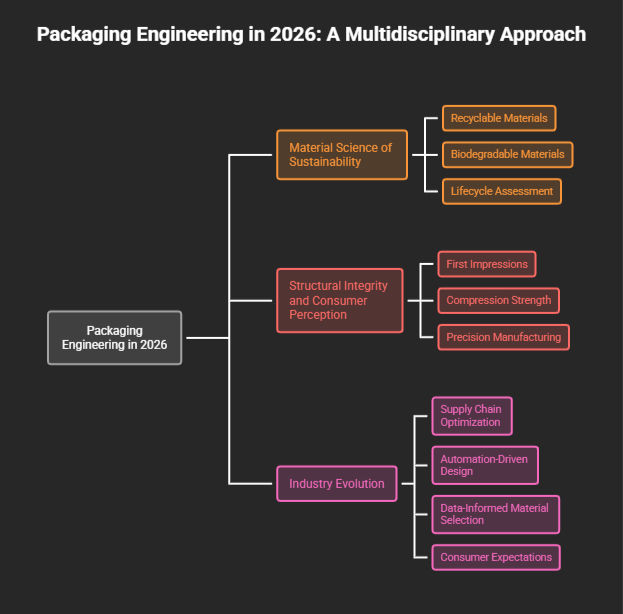
Packaging has evolved beyond its traditional role as a protective enclosure. In 2026, it represents a multidisciplinary engineering challenge where material science, structural mechanics, manufacturing precision, logistics, and consumer psychology intersect. Every packaging system must satisfy competing performance requirements: protecting products throughout increasingly complex supply chains while simultaneously delivering an experience that reinforces product quality and brand credibility.
From a technical perspective, successful packaging design is an optimization problem. Engineers and packaging specialists continuously balance weight reduction, compressive strength, moisture resistance, manufacturing efficiency, environmental impact, and lifecycle cost. Minor adjustments in material selection or structural geometry can significantly influence transportation efficiency, warehouse performance, product damage rates, and customer perception.
As global supply chains become more sophisticated and sustainability standards continue to evolve, packaging is increasingly recognized as a strategic engineering discipline rather than a downstream design exercise.
The Material Science of Sustainability
Sustainability discussions often simplify packaging into a binary comparison between recyclable and biodegradable materials. However, the broader concept of sustainable packaging encompasses material selection, lifecycle assessment, supply chain efficiency, and end-of-life recovery, making the engineering reality far more nuanced than material choice alone.
Recyclable Materials: Performance Through Circular Systems
Recyclable materials such as corrugated fiberboard, paperboard, aluminum, and certain polymer families maintain structural consistency while supporting established recycling infrastructures. Their environmental performance depends less on theoretical recyclability and more on collection efficiency, contamination rates, and regional recycling capabilities.
Fiber-based packaging continues to dominate many industries because of its favorable strength-to-weight ratio, print compatibility, and renewable sourcing. Multi-wall corrugated structures, for example, provide exceptional compression resistance while minimizing transportation weight.
From an engineering standpoint, recyclable materials typically offer:
Predictable mechanical properties
High stacking strength
Consistent manufacturing tolerances
Established industrial recovery systems
The challenge lies in balancing recycled fiber content with structural performance, as repeated recycling cycles gradually shorten cellulose fibers and reduce mechanical strength.
Biodegradable Materials: Innovation with Performance Constraints
Biodegradable materials—including polylactic acid (PLA), polyhydroxyalkanoates (PHA), molded fiber composites, and starch-based polymers—represent an expanding area of materials research.
While these materials reduce long-term environmental persistence under appropriate conditions, their engineering characteristics differ considerably from conventional packaging substrates.
Key technical considerations include:
Moisture sensitivity
Thermal stability
Oxygen barrier performance
Shelf-life compatibility
Industrial composting requirements
Many biodegradable polymers require carefully controlled disposal environments to achieve intended decomposition rates. Consequently, environmental performance depends not only on material chemistry but also on waste management infrastructure.
Material selection therefore becomes an engineering decision based on product requirements rather than sustainability claims alone.
Designing for the Entire Lifecycle
Modern packaging engineering increasingly evaluates materials through Life Cycle Assessment (LCA), considering:
Raw material extraction
Manufacturing energy
Transportation efficiency
Product protection performance
End-of-life recovery
This systems-based perspective recognizes that reducing product damage during transportation can sometimes deliver greater environmental benefits than marginal reductions in packaging material usage. Sustainable engineering therefore extends beyond material selection to encompass the entire logistics ecosystem.
Structural Integrity and Consumer Perception
Packaging structure influences more than product protection—it shapes how consumers subconsciously evaluate quality, precision, and reliability.
Although purchasing decisions appear subjective, research in consumer psychology suggests that tactile feedback and structural consistency contribute significantly to perceived product value.
The Engineering Behind First Impressions
Several structural variables influence customer perception:
Paperboard grammage and stiffness
Corrugated flute configuration
Folding precision
Edge compression strength
Surface smoothness
Dimensional accuracy
Consumers rarely calculate these characteristics consciously, yet they consistently respond to them through sensory experience.
Packaging with excessive flex, inconsistent folding, or poor dimensional stability often creates subconscious associations with lower manufacturing quality, regardless of the product itself.
Conversely, rigid structures with precise assembly tolerances communicate manufacturing discipline and reliability.
Compression Strength and Distribution Performance
Structural integrity begins long before the customer opens the package.
Packaging engineers evaluate multiple performance metrics, including:
Box Compression Test (BCT)
Edge Crush Test (ECT)
Burst Strength
Drop Resistance
Vibration Performance
Dynamic Load Stability
These measurements determine whether a package can withstand warehousing, palletization, transportation, and last-mile delivery without structural failure.
As e-commerce continues expanding globally, packaging must endure significantly more handling events than traditional retail distribution. Consequently, structural optimization has become increasingly data-driven.
Precision Manufacturing as a Quality Signal
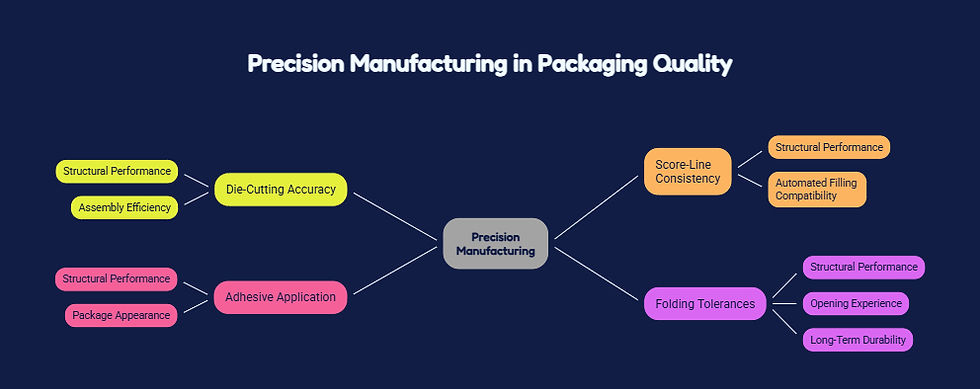
Die-cutting accuracy, score-line consistency, adhesive application, and folding tolerances collectively determine structural performance.
Manufacturing deviations measured in fractions of a millimeter may influence:
Assembly efficiency
Automated filling compatibility
Package appearance
Opening experience
Long-term durability
This level of precision explains why structural engineering has become an integral component of packaging quality assurance.
Industry Evolution: Packaging Engineering in 2026
Global packaging systems are adapting to rapidly changing market conditions driven by supply chain complexity, automation, sustainability regulations, and shifting consumer expectations.
Rather than isolated design improvements, the industry is undergoing systemic transformation.
Supply Chain Optimization
Modern packaging increasingly functions as an operational asset within logistics networks.
Engineers now prioritize:
Dimensional optimization for pallet efficiency
Reduced transportation volume
Lower shipping weight
Automated warehouse compatibility
Damage reduction through structural optimization
Even marginal improvements in packaging geometry can generate measurable gains in transportation efficiency across global distribution networks.
Automation-Driven Design
Manufacturing automation continues reshaping packaging development.
Packaging structures must now accommodate:
Robotic assembly systems
Vision-based quality inspection
High-speed filling equipment
Automated case packing
Robotic palletization
This shift places greater emphasis on dimensional consistency, repeatability, and manufacturing precision than ever before.
Data-Informed Material Selection
Material selection increasingly relies on predictive modeling and engineering simulation rather than historical preference.
Finite Element Analysis (FEA), compression modeling, moisture testing, and transportation simulations enable engineers to predict structural performance before physical prototyping.
This digital engineering approach reduces development time while improving structural reliability.
Consumer Expectations Continue to Evolve
Modern consumers increasingly associate packaging quality with broader organizational competence.
Clean structural design, efficient material usage, functional protection, and environmentally responsible engineering collectively influence perceptions of product credibility.
Rather than focusing solely on aesthetics, packaging development increasingly integrates engineering principles with human-centered design to create measurable improvements in user experience.
Conclusion: Packaging as Silent Engineering
Packaging has become one of the most technically sophisticated yet understated components of modern product development.
Its effectiveness is determined not by visual appearance alone, but by the successful integration of material science, structural engineering, manufacturing precision, logistics optimization, and consumer behavior research.
Looking beyond 2026, the industry's trajectory points toward increasingly intelligent material selection, simulation-driven structural design, circular manufacturing systems, and greater integration between engineering disciplines and sustainability objectives.
The future of packaging will not be defined by louder branding or more elaborate graphics. Instead, competitive advantage will emerge from invisible engineering decisions—those that improve structural performance, optimize resource efficiency, strengthen supply chain resilience, and enhance the customer experience without demanding attention.
Ultimately, the most effective packaging is often the least noticeable. It performs its structural function flawlessly, protects products efficiently, minimizes environmental impact, and quietly communicates precision through engineering excellence.


Comments