Customer Retention Strategy for E-commerce Brands: Why It Beats Acquisition in 2026

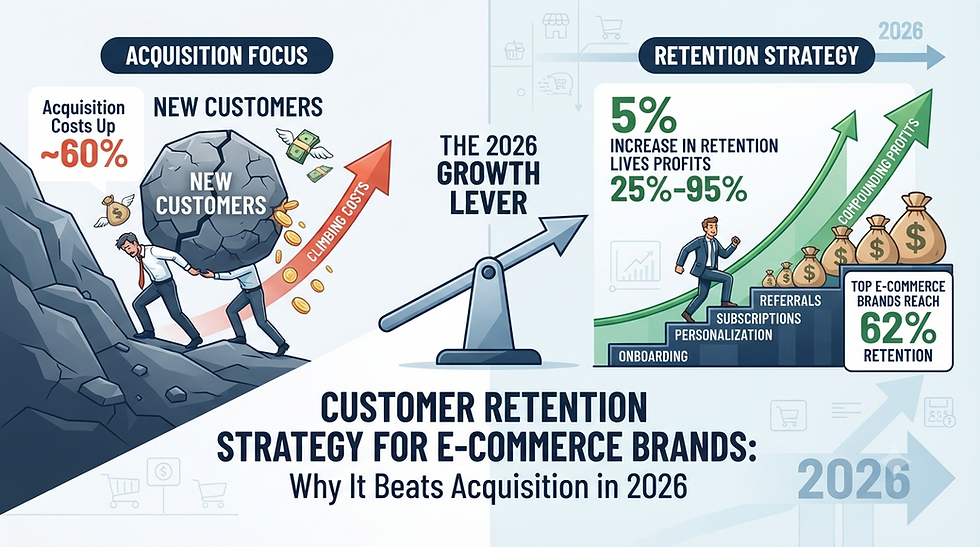
Every e-commerce brand is fighting the same battle right now: acquisition costs keep climbing, but the returns keep shrinking. The average cost to acquire a new customer in e-commerce has climbed by roughly 60% over the last four years. Most brands respond by spending more — bigger ad budgets, more channels, more creative testing. Few stop to ask whether they're bleeding customers out the other side just as fast as they're bringing them in.
That's the real growth lever in 2026: retention, not acquisition.
The Math That Changes the Conversation
Improving retention by just 5% can lift profits anywhere from 25% to 95%. That single number should reframe how any B2B brand growth strategy gets built — because most companies still measure success by new-customer count, not by how many of last quarter's buyers came back.
The gap between average and top-performing brands is wide. The typical e-commerce retention rate sits around 30%, while the strongest performers reach as high as 62% — the same market, the same acquisition costs, radically different outcomes. That gap is rarely about product. It's about what happens after the first purchase.
Three Layers Where Retention Is Actually Won or Lost
1. Onboarding and first-purchase experience The first 30 days decide whether a customer becomes a repeat buyer or a one-time transaction. Mobile-first brands feel this hardest — churn in the first month on mobile commerce is brutal, and most of it is preventable with clearer post-purchase communication, not more ad spend.
2. Personalization that's actually earned Personalization has stopped being a nice-to-have. 71% of consumers now expect personalized experiences, and 76% get frustrated when a brand fails to deliver one. That expectation gap is where a lot of "good" brands quietly lose loyal customers to competitors who simply remember what they bought last time.
3. Recurring revenue structures (subscriptions done right) Where the product fits, subscriptions change the entire retention curve. Subscription customers carry roughly 4.1x higher lifetime value than one-time buyers, with 45% still retained at 12 months versus 15% for non-subscribers. But structure matters — the top reason subscribers cancel is inflexibility, with 35% citing an inability to pause or adjust their delivery schedule as their main frustration. A subscription model without pause/skip flexibility often creates churn instead of preventing it.
The Underrated Growth Channel: Referrals
Retention doesn't just save money — it compounds. Customers who come through referrals are 4x more likely to purchase and carry a 16% higher lifetime value than customers acquired through paid channels. A retained, satisfied customer base isn't just cheaper to keep — it becomes a quiet acquisition engine of its own, at close to zero marginal cost.
What This Means for Your Brand Growth Strategy
If you're a founder or growth lead still building your roadmap around acquisition metrics alone, the numbers above suggest a rebalancing:
Audit your first-30-day customer journey before touching your ad budget
Treat personalization as infrastructure, not a marketing add-on
If subscriptions fit your product, build in flexibility from day one — rigidity is what kills them
Track referral rate as a core growth metric, not an afterthought


Comments